The Home Monthly
From The Home Monthly, 6 (September 1896): 4-5.

TWO WOMEN
THE WORLD IS WATCHING
For the last thirty years no woman in Canton has been so popular and admired as Ida
Saxton, first as the daughter of its leading banker, afterwards as the wife of a politician
of national fame, always as her gracious and charming self. Canton people do not seem
much surprised now that this interest has become
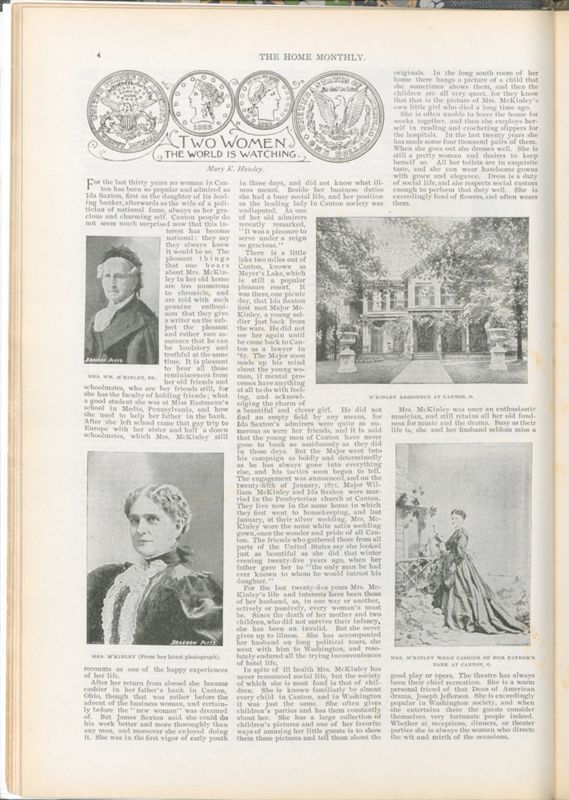
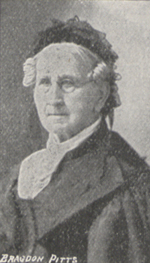 MRS. WM. M'KINLEY, SR.
national: they say they always knew it would be so. The pleasant things that one hears
about Mrs. McKinley in her old home are too numerous to chronicle, and are told with
such genuine enthusiasm that they give a writer on the subject the pleasant and rather
rare assurance that he can be laudatory and truthful at the same time. It is pleasant
to hear all those reminiscences from her old friends and schoolmates, who are her
friends still, for she has the faculty of holding friends; what a good student she
was at Miss Eastmann's school in Media, Pennsylvania, and how she used to help her
father in the bank. After she left school came that gay trip to Europe with her sister
and half a dozen
schoolmates, which Mrs. McKinley still
MRS. WM. M'KINLEY, SR.
national: they say they always knew it would be so. The pleasant things that one hears
about Mrs. McKinley in her old home are too numerous to chronicle, and are told with
such genuine enthusiasm that they give a writer on the subject the pleasant and rather
rare assurance that he can be laudatory and truthful at the same time. It is pleasant
to hear all those reminiscences from her old friends and schoolmates, who are her
friends still, for she has the faculty of holding friends; what a good student she
was at Miss Eastmann's school in Media, Pennsylvania, and how she used to help her
father in the bank. After she left school came that gay trip to Europe with her sister
and half a dozen
schoolmates, which Mrs. McKinley still
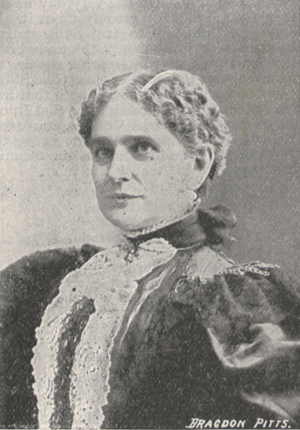 MRS. M'KINLEY (From her latest photograph).
recounts as one of the happy experiences of her life.
MRS. M'KINLEY (From her latest photograph).
recounts as one of the happy experiences of her life.
After her return from abroad she became cashier in her father's bank in Canton, Ohio, though that was rather before the advent of the business woman, and certainly before the "new woman" was dreamed of. But James Saxton said she could do his work better and more thoroughly than any man, and moreover she enjoyed doing it. She was in the first vigor of early youth in those days, and did not know what illness meant. Beside her business duties she had a busy social life, and her position as the leading lady in Canton society was undisputed. As one of her old admirers recently remarked, "It was a pleasure to serve under a reign so gracious."
There is a little lake two miles out of Canton, known as Meyer's Lake, which is still
a popular pleasure resort. It was there, one picnic day, that Ida Saxton first met
Major McKinley, a young soldier just back from the wars. He did not see her again
until he came back to Canton as a lawyer in '67. The Major soon made up his mind about
the young woman, if mental processes have anything at all to do with feeling, and
acknowledging the charm of a beautiful and clever girl. He did not find an empty field
by any means, for Ida Saxton's admirers were quite as numerous as were her friends,
and it is said that the young men of Canton have never gone to bank so assiduously
as they did in those days. But the Major went into his campaign as boldly and determinedly
as he has always gone into everything else, and his tactics soon began to tell. The
engagement was announced, and on the twenty-fifth of January, 1871, Major William
McKinley and Ida Saxton were married in the Presbyterian church at Canton. They live
now in the same
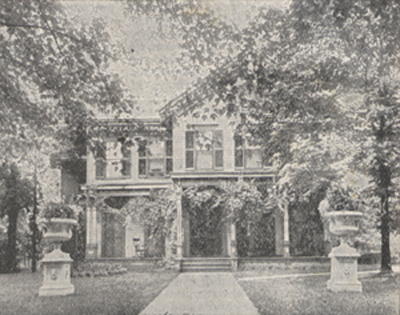 M'KINLEY RESIDENCE AT CANTON, O.
home in which they first went to housekeeping, and last January, at their silver wedding,
Mrs. McKinley wore the same white satin wedding gown, once the wonder and pride of
all Canton. The friends who gathered there from all parts of the United States say
she looked just as beautiful as she did that winter evening twenty-five years ago,
when her father gave her to "the only man he had ever known to whom he would intrust
his daughter."
M'KINLEY RESIDENCE AT CANTON, O.
home in which they first went to housekeeping, and last January, at their silver wedding,
Mrs. McKinley wore the same white satin wedding gown, once the wonder and pride of
all Canton. The friends who gathered there from all parts of the United States say
she looked just as beautiful as she did that winter evening twenty-five years ago,
when her father gave her to "the only man he had ever known to whom he would intrust
his daughter."
For the last twenty-five years Mrs. McKinley's life and interests have been those of her husband, as, in one way or another, actively or passively, every woman's must be. Since the death of her mother and two children, who did not survive their infancy, she has been an invalid. But she never gives up to illness. She has accompanied her husband on long political tours, she went with him to Washington, and resolutely endured all the trying inconveniences of hotel life.
In spite of ill health Mrs. McKinley has never renounced social life, but the society of which she is most fond is that of children. She is known familiarly by almost every child in Canton, and in Washington it was just the same. She often gives children's parties and has them constantly about her. She has a large collection of children's pictures and one of her favorite ways of amusing her little guests is to show them these pictures and tell them about the originals. In the long south room of her home there hangs a picture of a child that she sometimes shows them, and then the children are all very quiet, for they know that that is the picture of Mrs. McKinley's own little girl who died a long time ago.
She is often unable to leave the house for weeks together, and then she employs herself in reading and crocheting slippers for the hospitals. In the last twenty years she has made some four thousand pairs of them. When she goes out she dresses well. She is still a pretty woman and desires to keep herself so. All her toilets are in exquisite taste, and she can wear handsome gowns with grace and elegance. Dress is a duty of social life, and she respects social custom enough to perform that duty well. She is exceedingly fond of flowers, and often wears them.
Mrs. McKinley was once an enthusiastic musician, and still retains all her old fondness
for music and the drama. Busy as their life is, she and her husband seldom miss a
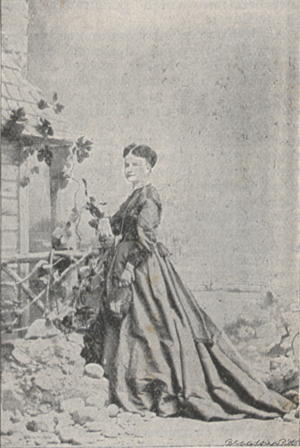 MRS. M'KINLEY WHEN CASHIER OF HER FATHER'S BANK AT CANTON, O.
good play or opera. The theatre has always been their chief recreation. She is a warm
personal friend of that Dean of American drama, Joseph Jefferson. She is exceedingly
popular in Washington society, and when she entertains there the guests consider themselves
very fortunate people indeed. Whether at receptions, dinners, or theater parties she
is always the woman who directs the wit and mirth of the occasions.
MRS. M'KINLEY WHEN CASHIER OF HER FATHER'S BANK AT CANTON, O.
good play or opera. The theatre has always been their chief recreation. She is a warm
personal friend of that Dean of American drama, Joseph Jefferson. She is exceedingly
popular in Washington society, and when she entertains there the guests consider themselves
very fortunate people indeed. Whether at receptions, dinners, or theater parties she
is always the woman who directs the wit and mirth of the occasions.
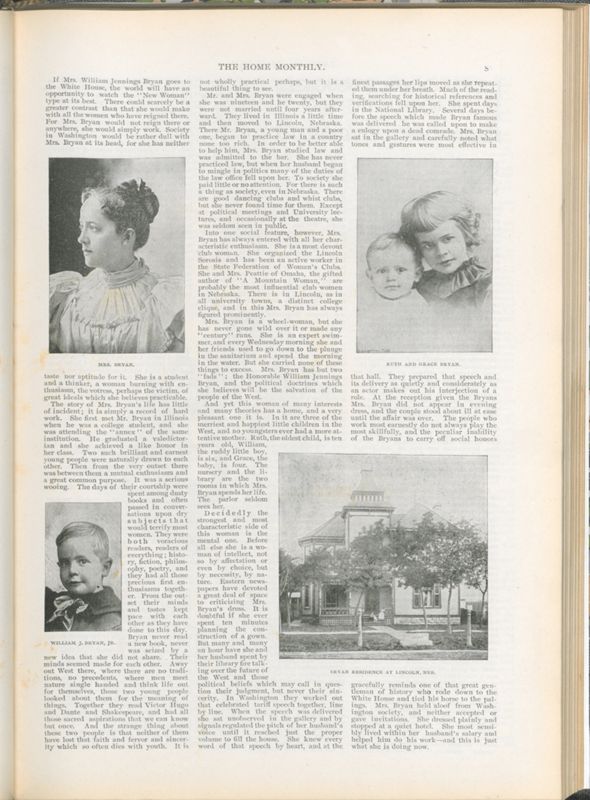
If Mrs. William Jennings Bryan goes to the White House, the world will have an opportunity
to watch the "New Woman" type at its best. There could scarcely be a greater contrast
than that she would make with all the women who have reigned there. For Mrs. Bryan
would not reign there or anywhere, she would simply work. Society in Washington would
be rather dull with Mrs. Bryan at its head, for she has neither
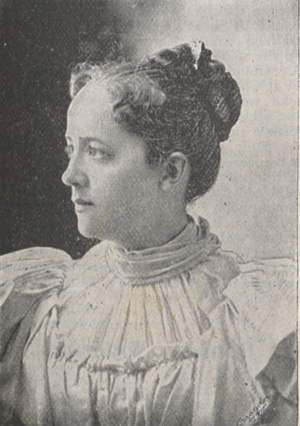 MRS. BRYAN.
taste nor aptitude for it. She is a student and a thinker, a woman burning with enthusiasm,
the votress, perhaps the victim, of great ideals which she believes practicable.
MRS. BRYAN.
taste nor aptitude for it. She is a student and a thinker, a woman burning with enthusiasm,
the votress, perhaps the victim, of great ideals which she believes practicable.
The story of Mrs. Bryan's life has little of incident; it is simply a record of hard
work. She first met Mr. Bryan in Illinois when he was a college student, and she was
attending the "annex" of the same institution. He graduated a valedictorian and she
achieved a like honor in her class. Two such brilliant and earnest young people were
naturally drawn to each other. Then from the very outset there was between them a
mutual enthusiasm and a great common purpose. It was a serious wooing. The days of
their courtship were
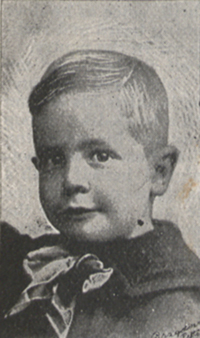 WILLIAM J. BRYAN, JR.
spent among dusty books and often passed in conversations upon dry subjects that would
terrify most women. They were
both voracious readers, readers of everything; history, fiction, philosophy, poetry,
and they had all those precious first enthusiasms together. From the outset their
minds and tastes kept pace with each other as they have done to this day. Bryan never
read a new book, never was seized by a new idea that she did not share. Their minds
seemed made for each other. Away out West there, where there are no traditions, no
precedents, where men meet nature single handed and think life out for themselves,
those two young people looked about them for the meaning of things. Together they
read Victor Hugo and Dante and Shakespeare, and had all those sacred aspirations that
we can know but once. And the strange thing about these two people is that neither
of them have lost that faith and fervor and sincerity which so often dies with youth.
It is not wholly practical perhaps, but it is a beautiful thing to see.
WILLIAM J. BRYAN, JR.
spent among dusty books and often passed in conversations upon dry subjects that would
terrify most women. They were
both voracious readers, readers of everything; history, fiction, philosophy, poetry,
and they had all those precious first enthusiasms together. From the outset their
minds and tastes kept pace with each other as they have done to this day. Bryan never
read a new book, never was seized by a new idea that she did not share. Their minds
seemed made for each other. Away out West there, where there are no traditions, no
precedents, where men meet nature single handed and think life out for themselves,
those two young people looked about them for the meaning of things. Together they
read Victor Hugo and Dante and Shakespeare, and had all those sacred aspirations that
we can know but once. And the strange thing about these two people is that neither
of them have lost that faith and fervor and sincerity which so often dies with youth.
It is not wholly practical perhaps, but it is a beautiful thing to see.
Mr. and Mrs. Bryan were engaged when she was nineteen and he twenty, but they were not married until four years afterward. They lived in Illinois a little time and then moved to Lincoln, Nebraska. There Mr. Bryan, a young man and a poor one, began to practice law in a country none too rich. In order to be better able to help him, Mrs. Bryan studied law and was admitted to the bar. She has never practiced law, but when her husband began to mingle in politics many of the duties of the law office fell upon her. To society she paid little or no attention. For there is such a thing as society, even in Nebraska. There are good dancing clubs and whist clubs, but she never found time for them. Except at political meetings and University lectures, and occasionally at the theatre, she was seldom seen in public.
Into one social feature, however, Mrs. Bryan has always entered with all her characteristic enthusiasm. She is a most devout club woman. She organized the Lincoln Sorosis and has been an active worker in the State Federation of Woman's Clubs. She and Mrs. Peattie of Omaha, the gifted author of "A Mountain Woman," are probably the most influential club women in Nebraska. There is in Lincoln, as in all university towns, a distinct college clique, and in this Mrs. Bryan has always figured prominently.
Mrs. Bryan is a wheel-woman, but she has never gone wild over it or made any "century" runs. She is an expert swimmer, and every Wednesday morning she and her friends used to go down to the plunge in the sanitarium and spend the morning in the water. But she carried none of these things to excess. Mrs. Bryan has but two "fads": the Honorable William Jennings Bryan, and the political doctrines which she believes will be the salvation of the people of the West.
And yet this woman of many interests and many theories has a home, and a very pleasant
one it is. In it are three of the merriest and happiest little children in the West,
and no youngsters ever had a more attentive mother. Ruth, the oldest child, is ten
years old, William, the ruddy little boy, is six, and Grace, the baby, is four. The
nursery and the library are the two rooms in which Mrs. Bryan spends her life. The
parlor seldom sees her.
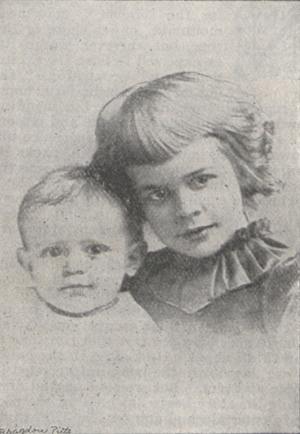 RUTH AND GRACE BRYAN.
Decidedly the strongest and most characteristic side of this woman is the mental one.
Before all else she is a woman of intellect, not so by affectation or even by choice,
but by necessity, by nature. Eastern newspapers have devoted a great deal of space
to criticizing Mrs. Bryan's dress. It is doubtful if she ever spent ten minutes planning
the construction of a gown. But many and many an hour have she and her husband spent
by their library fire talking over the future of the West and those political beliefs
which may call in question their judgment, but never their sincerity. In Washington
they worked out that celebrated tariff speech together, line by line. When the speech
was delivered she sat unobserved in the gallery and by signals regulated the pitch
of her husband's voice until it reached just the proper volume to fill the house.
She knew every word of that speech by heart, and at the finest passages her lips moved
as she repeated them under her breath. Much of the reading, searching for historical
references and verifications fell upon her. She spent days in the National Library.
Several days before the speech which made Bryan famous was delivered he was called
upon to make a eulogy upon a dead comrade. Mrs. Bryan sat in the gallery and carefully
noted what tones and gestures were most effective
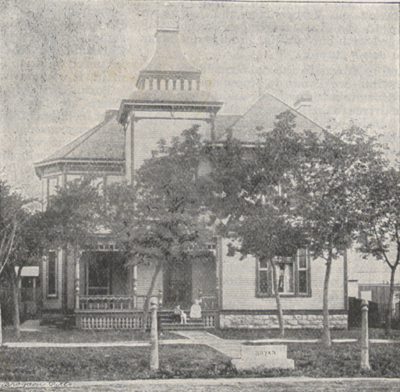 BRYAN RESIDENCE AT LINCOLN, NEB.
in that hall. They prepared that speech and its delivery as quietly and considerately
as an actor makes out his interjection of a role. At the reception given the Bryans
Mrs. Bryan did not appear in evening dress, and the couple stood about ill at ease
until the affair was over. The people who work most earnestly do not always play the
most skillfully, and the peculiar inability of the Bryans to carry off social honors
gracefully reminds one of that great gentleman of history who rode down to the White
House and tied his horse to the palings. Mrs. Bryan held aloof from Washington society,
and neither accepted or gave invitations. She dressed plainly and stopped at a quiet
hotel. She most sensibly lived within her husband's salary and helped him do his work—and
this is just what she is doing now.
BRYAN RESIDENCE AT LINCOLN, NEB.
in that hall. They prepared that speech and its delivery as quietly and considerately
as an actor makes out his interjection of a role. At the reception given the Bryans
Mrs. Bryan did not appear in evening dress, and the couple stood about ill at ease
until the affair was over. The people who work most earnestly do not always play the
most skillfully, and the peculiar inability of the Bryans to carry off social honors
gracefully reminds one of that great gentleman of history who rode down to the White
House and tied his horse to the palings. Mrs. Bryan held aloof from Washington society,
and neither accepted or gave invitations. She dressed plainly and stopped at a quiet
hotel. She most sensibly lived within her husband's salary and helped him do his work—and
this is just what she is doing now.